
Active Gain Control (AGC) Technology
Active Gain Control (AGC): Right Amount of Current, Right When It’s Needed
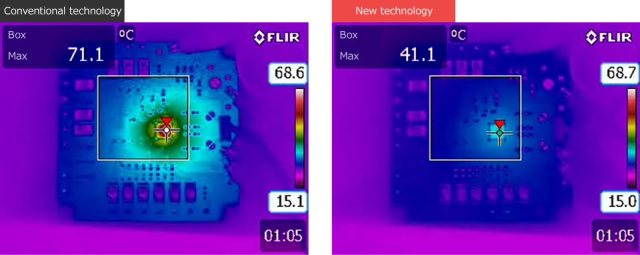
AGC technology adjusts the motor’s drive current in real time, so the motor only uses as much current as the load requires.
The problem with conventional drivers
Most stepper motor systems don’t know how hard the motor is working. To make sure the motor never runs out of torque, the driver is set to supply enough current for the heaviest load the motor might ever see. That extra current flows all the time, even when the load is light. The result is wasted energy and excess heat in both the driver and the motor.
There is a way to avoid this: add a sensor or microcontroller that watches the load and adjusts the current to match. However, this feedback system (called closed-loop control) is complicated to design and adds cost.
How AGC solves it
The CMD-4EX-SA-TBD and CMD-2ED-SA use motor driver ICs with AGC built in. AGC senses the load on the motor and adjusts the drive current automatically. No extra sensors or controller programming are needed.
- Light load: the motor runs on lower current, saving energy and reducing heat.
- Heavy load: the current rises as needed to deliver extra torque, then returns to normal when the load drops.
AGC in action
The thermal images below show the same driver under the same conditions, first without AGC and then with AGC enabled.
What this means for you
- Less heat. Lower current means the driver and motor run cooler, which reduces heat buildup in the system and the wear that comes with it.
- Energy savings. Power isn’t wasted on current the motor doesn’t need.
- Protection against stalling. Because the current rises when the load increases, the motor is far less likely to lose steps or stall.
- No added cost or complexity. You get the benefits of closed-loop efficiency without the extra hardware.
Working together with ACDS
The CMD-4EX-SA-TBD and CMD-2ED-SA also use Toshiba’s Advanced Current Detection System (ACDS). Normally, a driver measures motor current with a large, high-power sense resistor, which takes up board space and adds cost and heat. ACDS measures the current without that resistor. This gives the controller a smaller, simpler circuit board with fewer parts.
AGC and ADMD working together
The CMD-4EX-SA-TBD and CMD-2ED-SA also include Toshiba’s ADMD technology. In simple terms, ADMD makes the motor’s current waveform smoother and quieter, while AGC makes sure the current is only as high as the load requires.